
Categories
Amanda Ponce Real Estate Team, Company News & Culture, Housing Forecast, Housing Market, Tips and TricksPublished October 27, 2026
New Construction

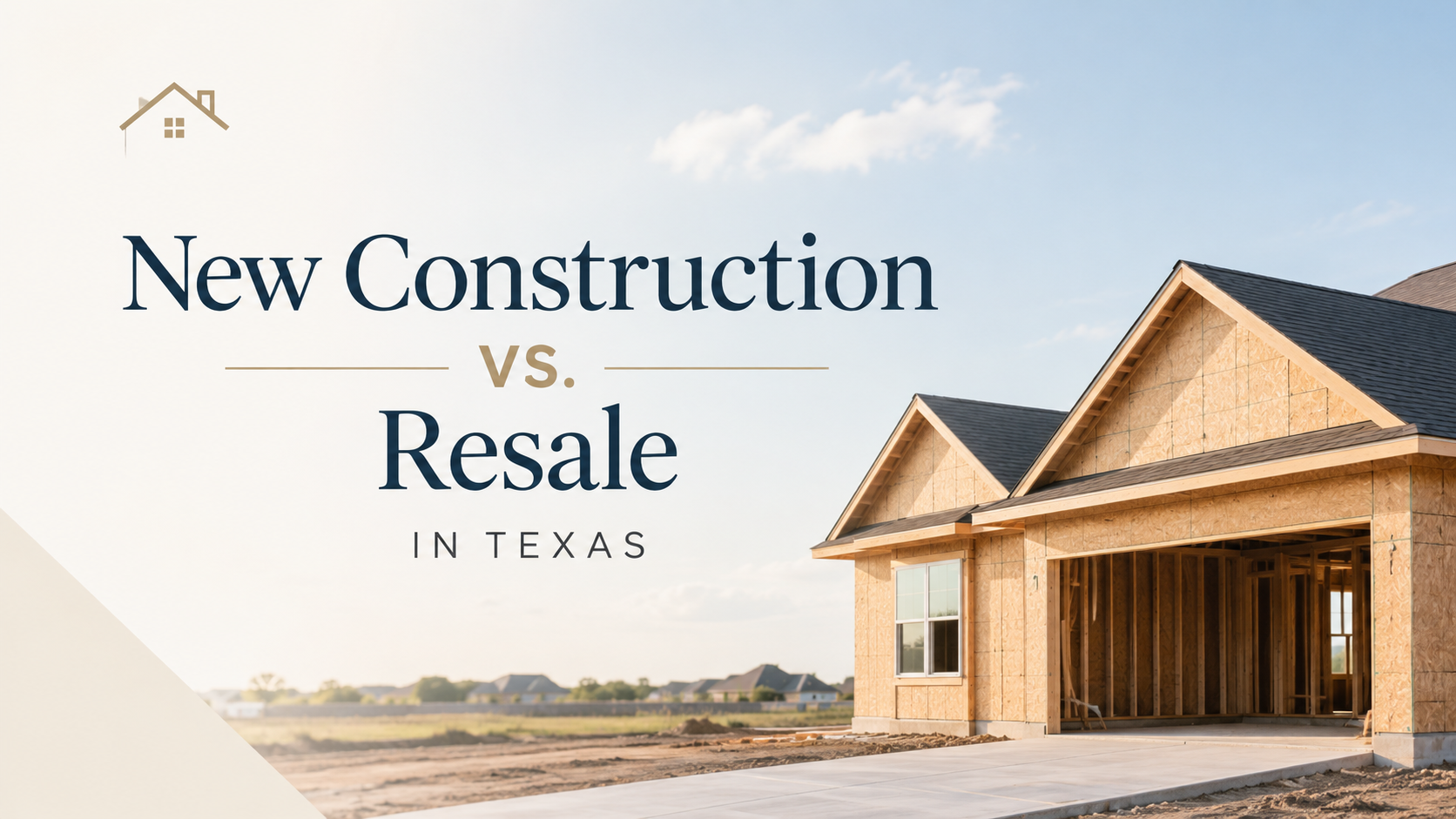
New Construction vs. Resale in Texas: What Buyers Should Know
When comparing new construction vs. resale homes in Texas, you’re choosing more than a new home versus an existing one. You’re weighing different timelines, customization options, neighborhood surroundings, maintenance considerations, and contract processes. The right choice depends on the specific property and what matters most to you.
If you’re buying in Austin or the surrounding Central Texas communities, use this guide to organize your priorities, ask better questions, and compare your options before making a commitment. The Amanda Ponce Real Estate Team can help you navigate the process and identify questions to discuss with the builder, seller, lender, inspector, or other qualified professionals.
1. Start With Your Priorities
Before deciding between new construction and a resale home, identify the features that will shape your everyday life. A home can look beautiful online or in a model tour, but the best fit is one that works for your routines, budget, and future plans.
Consider these priorities as you compare properties:
- Location and commute: Think about travel time to work, school, family, and the places you visit regularly.
- Layout and storage: Consider room sizes, storage, work areas, outdoor space, and how you use the home day to day.
- Neighborhood setting: Decide whether you prefer an established area or a community that is still being developed.
- Maintenance: Compare the visible condition of an existing home with the maintenance expectations and warranty terms of a new build.
- Move-in timing: Determine when you need to move and how much flexibility you have.
Practical Tip: Make two lists: non-negotiable needs and features you would simply like to have. This can help you compare homes fairly instead of focusing only on whether a property is new or previously owned.
2. Compare Timelines and Surroundings
Resale homes are typically already built, but the closing timeline still depends on financing, inspections, title work, contract deadlines, and the seller’s plans. New construction timing can vary based on the home’s stage of completion, materials, permitting, weather, and other factors.
When considering a new build, ask for the builder’s current timeline in writing. Find out what happens if completion dates change, and avoid making important plans based only on a casual estimate.
The surrounding area deserves just as much attention as the home itself. Visit at different times of day, evaluate access to your regular destinations, and research relevant public information. If a neighborhood is still under development, ask:
- Which roads, utilities, amenities, and services are already available?
- Which improvements are planned, and who is responsible for them?
- What is the expected schedule, and where can you find official updates?
- Are there community rules, association fees, or other requirements to review?
Practical Tip: Development plans and estimated completion dates can change. Verify important claims in writing and through appropriate public sources before relying on them.
3. Understand Customization, Upgrades, and Included Features
With new construction, buyers may be able to choose finishes, fixtures, or certain layout details, depending on the home and its construction stage. Ask which selections are included in the listed price, which are optional upgrades, when decisions must be made, and whether substitutions are possible.
Request written specifications that describe the materials and features planned for your home. A model home or display unit may contain upgrades that are not included in the property being offered, so confirm the details in the builder’s documents.
For a resale home, some improvements may already be complete and can be viewed in person. Ask for available invoices, permits, and warranties for recent work. Cosmetic updates can be attractive, but they do not replace an understanding of the age and condition of major systems.
- For new construction: Confirm included appliances, finishes, fixtures, landscaping, and any additional costs for upgrades.
- For resale: Ask about renovations, repairs, permits, warranties, and the condition of major components.
- For both: Make sure the property’s features and any promises that affect your decision are documented.
Practical Tip: Compare the actual features included in each property—not just the staged model, listing photos, or marketing descriptions.
4. Plan for Inspections, Punch Lists, and Warranties
Do not assume a newly built home does not need an independent inspection. Ask an appropriately qualified inspector what stages can be reviewed and how access will be arranged. A builder’s quality check and a buyer’s independent inspection serve different purposes.
Before accepting completed work, document visible unfinished items or concerns in a written punch list and ask how they will be addressed. Review warranty documents carefully so you understand what is covered, what is excluded, how to submit a claim, and which deadlines apply.
For a resale home, arrange an inspection, review the seller’s disclosures, and clarify whether any warranties transfer to you. If an inspector identifies a concern that needs further evaluation, consider consulting a qualified specialist.
For either type of home, ask:
- What inspections are allowed, and when can they take place?
- How will identified issues or incomplete work be documented and resolved?
- Who handles service requests after closing?
- What do the warranty terms cover, and what are the exclusions and time limits?
Practical Tip: Confirm inspection arrangements and repair procedures against the contract, site rules, and construction schedule. Put important commitments in writing.
5. Questions to Ask a Builder Before Signing
Builder sales staff can explain the home and the builder’s process, but you should understand the nature of their representation and the terms of any agreements before moving forward. Ask whether you need to register your own agent before your first visit and whether any agreements or fees may apply.
Before signing, request the full contract and all addenda. Builder contracts may differ from standard resale forms, so consider having a Texas real estate attorney review legal language if you need legal advice.
Useful questions include:
- Price and features: What exactly is included, and what costs extra?
- Changes: How are selections, substitutions, or requested changes handled?
- Timeline: What are the key dates, and what happens if construction is delayed?
- Inspections: When and how can independent inspections be scheduled?
- Warranty: How are claims submitted, and who responds to service requests?
- Community details: What utilities, association rules, disclosures, and plans should I review?
- Representation: What are the builder’s sales staff responsible for, and what representation will my own agent provide?
Practical Tip: Ask for written answers to questions that affect your decision. A verbal explanation is not a substitute for understanding the signed documents.
6. Questions to Ask When Buying a Resale Home
An existing home gives you an opportunity to see its current condition and surroundings, but it is still important to investigate the property carefully. Review available information, meet contract deadlines, and arrange inspections promptly.
Ask about:
- Repairs and renovations: What work has been completed, and are invoices, permits, or warranties available?
- Major systems: What is known about the age and condition of the roof, HVAC, plumbing, electrical, and other key components?
- Property details: What records are available regarding boundaries, restrictions, and items included in the sale?
- Disclosures and deadlines: What information has the seller provided, and what dates must you meet under the contract?
- Location and surroundings: What are the drainage, street access, noise, nearby services, and usual travel routes like?
Review seller disclosures and other available records, and consult qualified professionals when a question requires specialized evaluation. Avoid making assumptions based solely on appearance or broad neighborhood descriptions.
Practical Tip: If an inspection raises concerns, ask your agent about the appropriate next steps under your contract and consider seeking advice from a qualified specialist.
7. Make a Side-by-Side Comparison
Once you have gathered information, compare the specific homes against the priorities you identified at the beginning. A simple checklist can help you spot trade-offs and identify unanswered questions.
- Move-in date: Does the expected timeline match your needs?
- Location: Does the area work for your daily routine and long-term plans?
- Layout and features: Does the home meet your practical needs?
- Condition and maintenance: What repairs, upkeep, or follow-up may be required?
- Customization: Are the available choices worth the time and potential additional cost?
- Contract terms: Do you understand the deadlines, obligations, and available options?
- Verified information: Have important details been confirmed through documents, inspections, or appropriate professionals?
Practical Tip: If a decision depends on an inspection, written specification, contract detail, or professional opinion, get that information before committing whenever possible.
8. Work With the Right Professionals
A buyer’s agent can help coordinate tours, explain the transaction process, and identify questions to raise with a builder, seller, or specialist. Confirm the terms of representation and any fees before proceeding.
Other professionals may help with specific parts of the process:
- Lender: Explains financing options and loan requirements.
- Inspector or contractor: Evaluates the home’s condition and identifies issues within their area of expertise.
- Real estate attorney: Advises on legal language and contract questions.
- Title and closing professionals: Help address title requirements and complete the transaction.
The best choice is not automatically the newest home or the home that looks most updated. It is the property whose verified details, costs, timing, and terms align with the way you want to live.
Frequently Asked Questions
Is new construction better than a resale home in Texas?
Neither option is universally better. Compare the specific properties, location, timelines, condition, contract terms, and your daily needs.
Should I get an inspection on a newly built Texas home?
Consider an independent inspection and ask a qualified inspector how to arrange it within the builder’s contract and construction schedule.
What should I ask a home builder before signing?
Ask what is included, how changes and delays are handled, what inspection access is allowed, and how warranty claims work. Review the full contract and consider legal advice when needed.
Can I use my own agent when buying new construction?
Ask about builder registration requirements, representation, and any agreements or fees before visiting or signing. Confirm the arrangement in writing.
Ready to Compare Your Homebuying Options?
Whether you are considering a brand-new home or an existing property, the Amanda Ponce Real Estate Team can help you think through your priorities and prepare for your next steps in Austin and the surrounding Central Texas communities.
There is no pressure—just a helpful conversation about your plans, questions, and options.
Visit our website: https://www.amanda.austinbuysellhomes.com/
Schedule a buyer consultation: https://contactamanda.netlify.app/
Read the Full Blog: https://amanda-ponce-new-construction-resale-guide.netlify.app/
Let’s find the home that fits your priorities—not just the label “new” or “resale.” 🏡

Amanda Ponce
Operator | Amanda Ponce Real Estate Team | Keller Williams
or another way